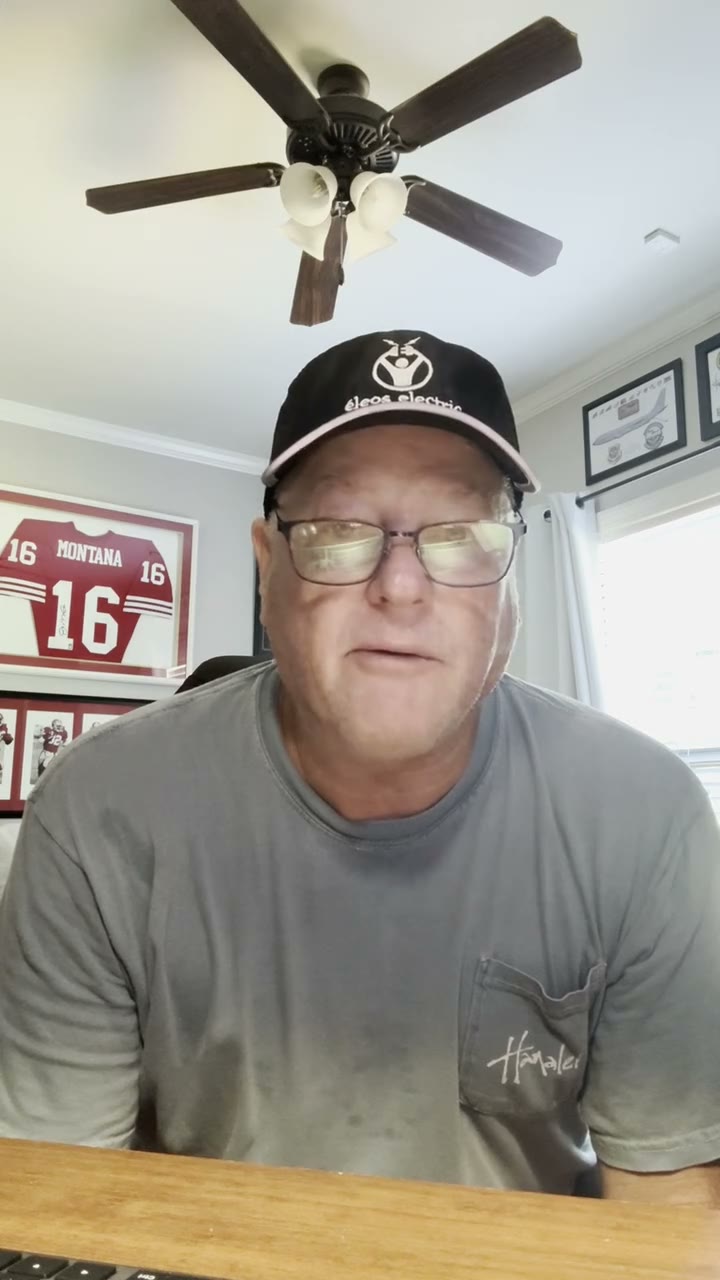


"Excellent results — at about 3% of gross."
Billy Coghlin runs an independent shop doing work that competes with dealership service bays. He is refreshingly blunt about not understanding how any of the marketing functions — and equally blunt about what it returns.
"I do know that I'm getting excellent results, and I'm only spending about 3% of gross. So I'm really happy."
The moments
that matter.
"I really have no idea what he's doing and how it works"
Said as a joke, but it's the honest description of a working engagement. A shop owner's job is fixing cars. If he has to understand schema markup, we've failed him.
"I'm only spending about 3% of gross"
Billy measures marketing the way an operator should — as a percentage of revenue, not as an invoice. That framing is the whole reason he can tell whether it's working.
"I'm getting excellent results"
The owner's own read on return. We're not attaching a lead count to it, because no before/after dataset exists for this engagement — his assessment is the claim.
Where they
started.
An independent shop competing against dealership service departments and national chains. The work was premium; the brand presentation was commodity.
Stock mechanic photography undercuts premium positioning instantly. Visitors subconsciously match site quality to shop quality, and the old site was making the wrong promise.
Needed service × vehicle coverage to rank on long-tail queries — "Audi brake service Santa Rosa", "Mercedes oil change Sonoma County" — without degenerating into a thin-page farm.
No efficient way to add services, cities, or makes later without paying for design work every time.
What we
actually did.
Positioning to match the actual work
A design system built on European-marque visual cues — dark premium palette, generous type, editorial layout. The site now sits where the shop actually competes instead of in the commodity auto-repair category.
Real shop photography, zero stock
Every photograph is inside the shop — the bays, the lifts, the actual vehicles. Buyers register the difference in half a second, and for auto repair it's the single strongest trust signal a shop has.
A service × make page matrix
62 pages across service types and vehicle makes, each targeting a specific long-tail query. Hand-tuned copy, not programmatic filler — the distinction Google notices.
A design system that scales without a designer
New services, cities, or marques ship in hours because the template already holds the premium bar. The build doesn't decay the first time someone adds a page.
What
changed.
- "I'm getting excellent results, and I'm only spending about 3% of gross." — Billy Coghlin, owner
- "I really have no idea what he's doing and how it works… So I'm really happy." — Billy Coghlin, owner
- → 62-page custom build spanning service types × vehicle makes
- → Real shop photography throughout — bays, lifts, specific vehicle work, no stock imagery
- → CSS v6 design system: typography scale, spacing system, color tokens, component primitives
- → LocalBusiness + AutoRepair schema on every page
- → Phone CTA pinned on mobile; service-specific contact forms with context-aware routing
- → Trust signals above the fold — certification, marque expertise, reviews
- → Google Ads running as a parallel lead channel alongside organic
- ○ Layering Local SEO and Google Business Profile work on top of the positioning lift
- ○ Owner-reported return is the current measure — no before/after ranking or lead dataset exists for this engagement
Want the page-by-page breakdown instead of the testimonial? The Hahn Automotive case study covers the whole engagement — every strategic decision, everything we shipped, and what we deliberately deferred.
0:14,
unedited.
The only problem is, I really have no idea what he's doing and how it works.
However, I do know that I'm getting excellent results, and I'm only spending about 3% of gross.
So I'm really happy.
Transcribed from the source recording. Only proper nouns were corrected for spelling — no wording was changed, added, or smoothed.
The part most
agencies skip.
The site stopped arguing with the shop
Billy's bays do dealership-grade work. The old site said corner-lot mechanic. Closing that gap did more for conversion than any copy change could, because it removed a contradiction the visitor could feel.
Long-tail beats head terms for a single shop
"Auto repair Santa Rosa" is a knife fight against chains with real budgets. "Audi brake service Santa Rosa" is a buyer who already knows what they want. 62 pages of the second kind outperforms one page of the first.
Spend efficiency was the goal, not spend volume
3% of gross is the number Billy cites. Getting there is about pointing money at intent that already exists rather than manufacturing demand — which is why the page matrix and the ad channel were built to feed each other.
He never has to think about it
The first line of his testimonial is that he doesn't know how it works. That's the design goal, not a gap. Marketing that requires the owner's attention is marketing that eventually stops.
None of the above was guessed at.
This engagement opened with a Foundation Assessment — a diagnostic of organic visibility, map-pack position, AI-search presence, and conversion path. It's how we know which lever to pull first, and it's why Billy Coghlin never had to learn any of the mechanics.
The disciplines
behind this story.
Websites That Close
Fast, wired, conversion-obsessed. Not a brochure.
Details →Local SEO
Own the three-pack. Own the map. Own the phone.
Details →Content & Authority
The compound interest of search.
Details →Paid Ads
Google Ads that don't bleed budget.
Details →
Different trade.
Same problem.
Hahn Automotive is an independent auto repair shop, but the constraint — being invisible to buyers who haven't already heard of you — is identical across local service businesses. Here's how we approach the neighbours. Or read the Auto Repair Shops playbook directly.
What people
ask next.
How much should an auto repair shop spend on marketing?
Billy Coghlin puts Hahn Automotive's spend at about 3% of gross revenue and calls the results excellent. We won't quote you an industry benchmark we can't source — what matters is that measuring spend against revenue, rather than against the invoice, is the only way to know whether marketing is earning its place. The right percentage depends on your competition and how much demand is already searching for you.
Why does an auto repair shop need 62 pages?
Because buyers don't search generically. Someone typing "Audi brake service Santa Rosa" wants a page about Audi brake service in Santa Rosa, not a general services page. Each service × make combination is a separate query with separate intent, and each one can rank on its own. The 62 pages are hand-written, not templated filler — that distinction matters to Google.
Does real photography actually affect auto repair conversions?
It's one of the strongest trust signals in the category. Visitors match site quality to shop quality within about half a second of landing, and stock mechanic imagery reads as generic immediately. Every photo on the Hahn build is inside the actual shop.
Can you help an independent shop compete with dealership service departments?
That was the entire brief here. You don't beat a dealership on ad budget — you beat them on positioning and on long-tail intent they don't bother to target. The site was rebuilt to signal specialist-grade quality before the visitor reads a single service description.
What's the first step for an auto shop?
A Foundation Assessment — a diagnostic of your current visibility across organic search, the map pack, AI search, and your conversion path. It identifies what's actually limiting you before anyone proposes a scope of work.
Want what Billy Coghlin got?
Run your business through the same diagnostic that opened this engagement. You'll get a personal read from Bryan within one business day — no call required to start.
Powered by Google Places · Pick the real you from the dropdown
No Google listing? No problem — we'll still map your market.
By submitting, you agree to be contacted by Bonsai Marketing. No spam. Ever.
Your bonsai is being tended.
We got your details. Expect a personal reply within one business day — from a human, not a funnel.