What if the people you most wanted to meet had a reason to spend an hour with you?
Bryan Fikes recently experienced Sunny Ray's podcast-led relationship model firsthand.
What looked like a podcast interview turned out to be a much larger business strategy: build your own media platform around the investors, customers, partners and industry leaders you most want to know — and let genuine conversations replace cold introductions.
For founders, CEOs and ambitious companies building strategic relationships, authority and pipeline
Cold outreach asks someone for their time.
A great interview
gives them a reason
to spend an hour with you.
Why this caught my attention.
Sixty seconds on what I saw during that interview, and why I think a specific kind of founder should understand the model — even if they never use it.
Bryan Fikes · Founder, Bonsai Marketing
Read the transcript +
I'm Bryan Fikes with Bonsai Marketing.
I recently sat down with Sunny Ray for a podcast. And somewhere in that conversation, I realized there was a much bigger business strategy behind what he was doing.
It wasn't really about starting another podcast.
It was about giving founders a reason to build genuine relationships with the investors, customers, partners and industry leaders they actually want to meet.
Think about it. A cold email asks someone for their time. A real interview gives them a reason to spend an hour with you.
So instead of opening with a pitch, you open with a conversation. And every one of those conversations can also become content, authority, search visibility, and an asset your company owns.
I've spent nearly three decades in digital marketing. I pay attention when I see an interesting relationship or customer acquisition model. I think this is one of those.
It is definitely not for everybody.
But if you're launching something, raising capital, building a strategic network, or trying to establish real authority around your company, I think it's worth understanding.
Take a look at how the model works below.
And if it feels like it fits where you're trying to go, we'll help you figure out the next step.
The conversation that made me see the model differently.
From Shtick to Strategy: Making Your Brand Memorable
Watch on YouTube ↗What Bryan saw.
Bryan went in as a podcast guest. Somewhere in the process he realised the larger value wasn't the resulting media at all. The real asset was the architecture around the conversation.
- 01 Who are the people you want to know?
- 02 What would give them a legitimate reason to talk with you?
- 03 What happens when those conversations become relationships and media assets at the same time?
Stop asking for meetings. Start creating conversations.
- 01 Identify
Name the people who could materially change your company's trajectory.
- Investors
- Customers
- Strategic partners
- Industry leaders
- Advisors
- 02 Invite
Invite them into a genuine founder-led conversation — not a pitch, an interview.
- 03 Interview
Spend meaningful long-form time on their ideas, their market, their expertise.
- 04 Build relationship
The relationship starts before anyone asks for anything.
- 05 Create media
The conversation becomes a durable asset your company owns.
- Podcast
- YouTube
- Short-form clips
- Founder content
- Searchable media
- 06 Follow up
Conversations continue naturally — on their terms, and yours.
- Investment
- Sales
- Partnerships
- Advisory
- Distribution
The podcast is the vehicle. The relationship is the asset.
Stop asking. Start giving.
This is the argument Sunny Ray makes for the model, in his own terms. We're reproducing it here because it's the clearest version of why this works — and because you should be able to judge it before you ever talk to anybody.
Every channel you buy is trying to reach one place.
The conference booth. The ad spend. The SEO. The event sponsorship. The content calendar. All of it is expensive machinery whose whole job is to end up as one conversation in one person's inbox.
Months and budget later
So go straight there. Cold outreach isn't one channel among many — it's the destination every other channel spends months trying to reach.
Which is exactly where almost everyone gets it wrong.
The inbox is already full of people asking for things. Cold outreach falls flat for one reason: it arrives asking. Can I have fifteen minutes. Can I show you a demo. Can I get on your calendar. It's one more person wanting something from a person who is wanted by everybody.
“Hi, I'd love to show you what we're building. Do you have 15 minutes this week?”
An ask, from a stranger, with nothing in it for the reader. Delete.
An invitation onto the record. Attention on their work, their company, their thinking.
Same channel. Opposite direction. You arrive with something they actually want.
A pitch dies in the inbox. An invitation gets walked upstairs.
Nobody forwards a sales email — forwarding one to your boss makes you look like you got sold. It ends there.
An invitation tends to get walked upstairs, because bringing your boss a platform, an audience and a flattering ask makes you look useful. Your email becomes their win.
And afterwards, the person you interviewed tends to share it — because it's their story and they want it seen. Their network hears about you from someone they already trust. That's the one introduction you can't buy.
Thirty minutes. That's the whole ask.
You show up and be curious. Everything before and after is somebody else's job.
You are the one asking.
On a sales call the buyer runs the clock and you're answering. In an interview it inverts. You choose the questions, so you choose what gets talked about — and every answer you'd normally have to fight for is given freely, because you asked about them.
| What you ask | What you learn |
|---|---|
| “What are you building, and where are you in it?” | Stage, traction, how real it is |
| “What is the hardest part right now?” | The pain, in their words, unprompted |
| “What have you already tried?” | Budget, appetite, what has already failed |
| “What happens if nothing changes this year?” | Urgency — and whether there is any |
| “Who else is in the room on a decision like that?” | The buying process, without asking about it |
It's a qualification call that leaves the other person feeling listened to instead of worked. Nobody has to pretend it isn't both.
There's a system around every conversation.
- 01 Booked A time on the calendar, with the questions already asked.
- 02 Pre-interview Fifteen minutes before the record button — who they are, what matters, what to avoid.
- 03 The conversation The only part that needs you. Thirty minutes, curious, no script.
- 04 Debrief Notes captured and read the same day, while it is all still fresh.
- 05 Follow-up Written and sent under your name, with a next step in it.
A hundred little landmines you should never have to learn.
Nothing compounds inside thirty days. Warm-up eats the first two weeks, replies land in week three, and anything worth counting starts after that. Sunny's team used to sell single months and stopped — it was manufacturing churn.
What are you trying to build?
I'm raising capital.
If you're preparing for a raise, the hard problem usually isn't building another deck. It's getting meaningful conversations with the right investors.
A founder-owned show creates a legitimate reason to begin those relationships before you ask anyone for capital.
- ◆ Target specific investor profiles
- ◆ Build genuine relationships first
- ◆ Establish founder credibility
- ◆ Sharpen and stress-test your narrative
- ◆ Create public proof of expertise
- ◆ Grow a larger strategic network
I need customers, partners or pipeline.
The same mechanism applies to revenue. Identify the executives, companies, partners and industry voices you most want relationships with.
Then build the media platform that naturally opens the conversation — with people who would have deleted the cold email.
- ◆ Strategic account outreach
- ◆ Partnership development
- ◆ Founder visibility
- ◆ B2B relationship building
- ◆ Content generated as a by-product
- ◆ Credibility that compounds
- ◆ Long-tail sales opportunities
You're not signing up to become a podcast producer.
Sunny Ray's service runs the operating infrastructure around the show. You choose who you want to meet and you host the conversation. The rest is handled.
The founder owns the show, the audience and the relationships created through it.
Sunny Ray states this directly: a flat fee for the technology and the work, never a percentage — and every relationship the show creates is yours. Confirm the current terms directly with his team before you engage.
What the first ninety days actually look like.
Two workstreams running together: Sunny's team builds and runs the outreach engine, Bonsai turns everything it produces into durable search and authority assets. Here's the sequence, and who owns each part.
- 00 Before anything Bonsai
Foundation Assessment
We map where your market actually gets answered today — Google, ChatGPT, Claude, Perplexity — and whether founder-led outreach is even the right lever for you. Free, and genuinely no pitch.
- 01 Days 1–2 Sunny's team
Kickoff
Ideal customer profile, the offer, the copy angle, and exactly what goes out under your name. You approve the copy before anything sends.
- 02 Weeks 1–2 Sunny's team
Infrastructure
Alternate sending domains registered, mailboxes provisioned, warm-up begins. Deliberately slow — this is the part that decides whether anything lands.
- 03 Week 3 Sunny's team
Sequences live
Invitations go out under your name. Replies route straight to your inbox. First conversations get booked and pre-interviewed.
- 04 From week 3 Bonsai
Amplification layer
Every recorded conversation becomes an episode page built to rank, clips, written derivatives, entity and schema work, and answer-engine visibility. The conversations stop being ephemeral.
- 05 Months 2–3 Both
Compounding
Copy tightens on real reply data, the target list sharpens weekly, and the published library starts doing its own recruiting. This is the part that does not exist inside thirty days.
- 06 Month 3+ You
Decide the runway
Three months is the honest minimum, not a trial. At that point you have real data on reply rates, conversation quality and what the published assets are returning — and you choose whether to extend.
You approve the copy before anything goes out. Nothing is ever sent as you without your sign-off — that's Sunny's stated rule, and it's the one we'd insist on anyway.
One conversation should never become just one piece of content.
Sunny's system creates the relationship and the media. Bonsai Marketing turns those conversations into a much larger digital authority footprint — the part most founders leave on the table.
- 01 One interview
- A single long-form conversation
- 02 Long form
- Podcast
- YouTube
- Episode page
- 03 Content engine
- Shorts
- Reels
- Articles
- Newsletter
- Quote assets
- 04 Search authority
- SEO
- Entity signals
- AI search / GEO
- Answer-engine visibility
- Topical authority
- 05 Business assets
- Sales follow-up
- Investor follow-up
- Founder authority
- Retargeting audiences
- Email nurture
Every interview becomes an authority asset.
What that amplification looks like for your company depends entirely on where you're starting. It's a conversation, not a package — see our services or read how we think about strategic judgment as the new agency advantage.
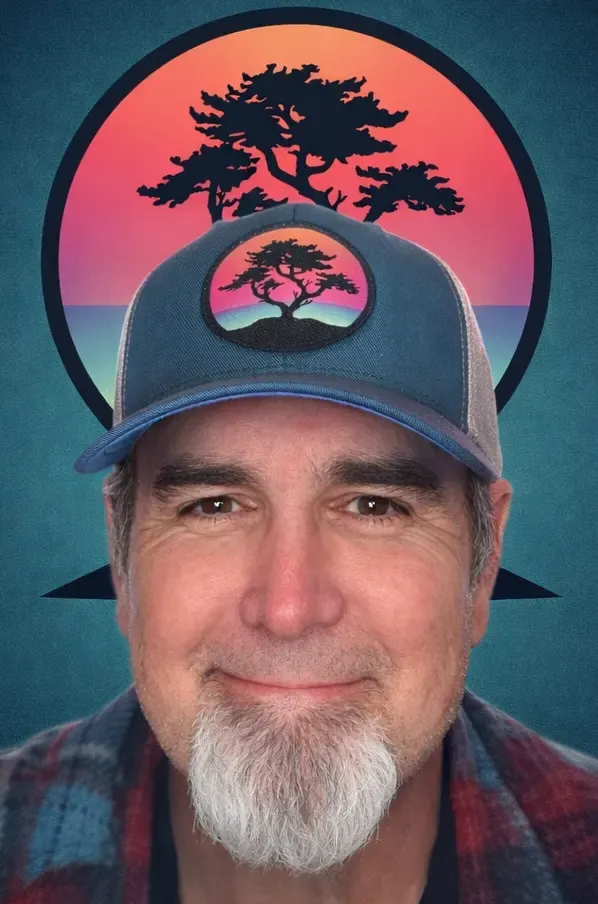
Why I'm putting this on Bonsai.
I've spent a lot of years watching marketing systems come and go.
What caught my attention here wasn't podcasting. It was the relationship architecture.
If I were launching a founder-led company today, I'd want multiple ways to build direct relationships with the people who could influence where the business goes next.
Content is useful. Authority is useful. But a genuine relationship with the right person can change the trajectory of a company.
That's why I wanted founders in my network to at least understand what Sunny is building. It won't fit every company. But when it fits, I think the concept is genuinely interesting.
Bryan Fikes · Founder, Bonsai Marketing
This could be worth exploring if…
- ◆ You are actively raising, or preparing to raise.
- ◆ You need relationships with a defined group of strategic buyers.
- ◆ Your founder story is strong but your public authority is thin.
- ◆ You're entering a new market or category.
- ◆ You need strategic partners, not just customers.
- ◆ You already create content, but it isn't generating relationships.
- ◆ You're building something complex that benefits from long-form conversation.
- ◆ Your company's success depends heavily on founder credibility.
- ◆ You can name 25–100 people you'd genuinely like to know.
Probably not the right fit if…
- × You just want cheap podcast production.
- × You want guaranteed investor introductions.
- × You expect someone else to sell your company for you.
- × You don't want to publicly represent your business.
- × You aren't willing to engage personally with guests.
- × You want instant results rather than relationship development.
We'd rather tell you it isn't a fit than take you through a process that wastes your time.
Could this model fit your company?
Tell us what you're building and who you're trying to reach. We'll review it and tell you straight whether a podcast-led relationship strategy makes sense for you.
No obligation · No guaranteed outcomes · A straight answer
One way in, and it runs through me.
I'm not going to hand you a booking link and take a cut. If this is a fit, I'd rather look at your situation first and then make the introduction myself.
Start with a Foundation Assessment.
Before anyone talks about engines or packages, we map where your market actually gets answered today — Google, ChatGPT, Claude, Perplexity — and whether founder-led outreach is even the right lever for you right now.
- ◆ Where your market gets answered today, and by whom
- ◆ Whether your authority gap is a content problem or a relationship problem
- ◆ Who you'd realistically want in the first 25 conversations
- ◆ What the amplification side would need to look like
- ◆ Whether the honest answer is 'not yet' — we'll say so
Free · No pitch · Yours to keep either way
I make the introduction myself.
If it's a fit, I introduce you to Sunny personally — with context on what you're building and who you're trying to reach, so the first conversation starts somewhere useful instead of at the beginning.
Our partner arrangement carries a 10% reduction that only applies to introductions made through us. There's no code to remember and nothing to enter — it's attached to the introduction itself.
You'll never be handed off to a sales sequence. One introduction, made by a person, to a person.
So you know the shape of it before we ever speak.
Sunny publishes his pricing, so there's no reason for us to be coy about it. Four scopes. The large figure is the paid-in-full total for a three-month runway; the line beneath it is the monthly alternative, which costs a little more overall. Six and twelve-month runways are also offered. The 10% partner reduction applies on top.
One audience, one ideal profile. Same build, same weekly review, shorter runway.
Customers, show guests or investors — whichever matters most right now. Full infrastructure, weekly review, and your show started: guests sourced, booked and pre-interviewed off the same list.
Two audiences at once, plus full episode production: editing, clips, distribution, and the follow-up that runs after each one.
All three audiences at once — prospects, partners and investors — with fundraising infrastructure included and quarterly strategy sessions.
Figures as published by Sunny Ray as of August 2026 and subject to change — we confirm current pricing before any introduction, so you'll have a firm number before you commit to anything. See his packages page ↗
Sunny's own guidance is that if your lifetime customer value is under roughly ten to twelve thousand dollars, this is a waste of your money — and his team will tell you so. It isn't for consumer products or for chasing small cheques. We'd rather you read that here than discover it three weeks in.
Bonsai Marketing has a referral partnership with Sunny Ray and may receive compensation if you engage his team through an introduction we make. That same arrangement is what funds your 10% reduction. We're stating it up front so you can weigh it — the recommendation is based on Bryan's firsthand experience of the model, but you should know we have an interest.
Straight answers.
01 What is podcast-led growth? +
02 Is this a podcast production service? +
03 Can founders use a podcast to meet investors? +
04 How can a podcast generate B2B leads? +
05 How does founder-led podcast outreach work? +
06 Does this guarantee funding? +
07 Can the strategy be used for customers instead of investors? +
08 Do I own the podcast? +
09 Does Sunny choose my guests? +
10 What happens after an interview? +
11 What can Bonsai add? +
12 How much does the system cost? +
13 How do I actually get started? +
14 Why not just go to Sunny directly? +
15 Does Bonsai receive compensation? +
Who are the 10 people you wish you could sit down with?
Instead of asking them for a meeting, maybe it's time to give them a reason to have a conversation.
Free Foundation Assessment first · 10% off through Bonsai · Bryan introduces you personally
No guaranteed fundraising, sales or investment outcomes. Every founder and company is different.
Bonsai Marketing provides marketing and referral services. Bonsai does not provide investment advice, broker securities, guarantee introductions, guarantee funding, or guarantee business results. Any fundraising activities remain the responsibility of the company and its professional advisers. Third-party pricing, packages and capabilities described on this page reflect information published by Sunny Ray as of August 2026 and may change — verify directly before engaging.