Don't Just Rank — Become the Answer Inside AI Search
AI search engines like ChatGPT, Gemini, and Siri are now recommendation engines — and if your business isn't showing up in those conversations, your next customer already chose a competitor.
AI search engines like ChatGPT, Gemini, and Siri are now recommendation engines — and if your business isn't showing up in those conversations, your next customer already chose a competitor.
Ranking on Google is no longer enough — your business must become the trusted answer inside AI-powered search engines like ChatGPT, Gemini, and Perplexity.
AI engines recommend businesses based on digital trust signals: consistent information, strong reviews, and demonstrated expertise — not just keywords.
A messy or incomplete digital footprint causes AI to play it safe and recommend a competitor who looks more authoritative.
The fastest way to audit your AI visibility is to open ChatGPT right now and ask who the best provider in your industry is near you — three different ways.
The businesses that win the next five years will be the ones AI trusts first, long before a customer ever clicks a link.
Most business owners are still optimizing for a search behavior that is rapidly becoming secondary. While they chase Google rankings, their ideal customers have moved on — opening ChatGPT, Gemini, or Siri and asking full, conversational questions like who should I trust for this job near me? The AI answers. The customer acts. And if your business never appeared in that conversation, you lost the sale before you ever had a chance to compete.
The Search Shift Nobody Warned You About
This isn’t a future trend. It’s happening right now, in your market, with your potential customers.
ChatGPT, Gemini, and Siri have become recommendation engines — not just information tools. When someone asks them for the best contractor, dentist, consultant, or service provider in their area, those platforms return a name with authority and confidence. They don’t show ten blue links and let the user decide. They pick a winner.
That winner should be you. For too many businesses right now, it isn’t.
Why AI Skips Your Business
Here’s what most people get wrong: they assume AI visibility is a technology problem. It isn’t. It’s a trust problem.
AI engines are pulling signals from your entire digital footprint to decide whether recommending you is a safe bet. They’re looking at:
- Consistency of your business name, address, and phone number across directories
- The strength and recency of your reviews
- Structured data that clearly communicates what you do and where you do it
- Genuine expertise demonstrated through your website content
When those signals are clean, coherent, and authoritative, the AI recommends you without hesitation. When they’re fragmented or thin, the AI plays it safe — and your competitor gets the nod instead.
The Test You Should Run Today
Before you close this tab, open ChatGPT on your phone. Type: Who is the best [your service] in [your city]? Then ask it two more ways. Different phrasing, same intent.
Watch what comes back.
If your business never appears, that exercise just told you everything about where your visibility stands — and where your marketing strategy needs to go next.
From Chasing Clicks to Building Authority
Traditional marketing rewards spend. AI search rewards trust. That is a fundamental mindset shift, and the businesses that internalize it first will hold a structural advantage that is very hard for late movers to close.
The digital footprint that earns AI trust is built over time through consistent information, strong community signals, and content that demonstrates real expertise. It cannot be bought overnight with an ad budget. That means the window to establish authority before your competitors do is open right now — and it will not stay open indefinitely.
What the Next Five Years Look Like
The businesses that dominate local markets through 2030 won’t necessarily be the ones with the biggest ad spend. They’ll be the ones that AI platforms have learned to trust implicitly — the businesses whose digital presence is so well-structured and authoritative that when a customer asks, the AI answers with their name.
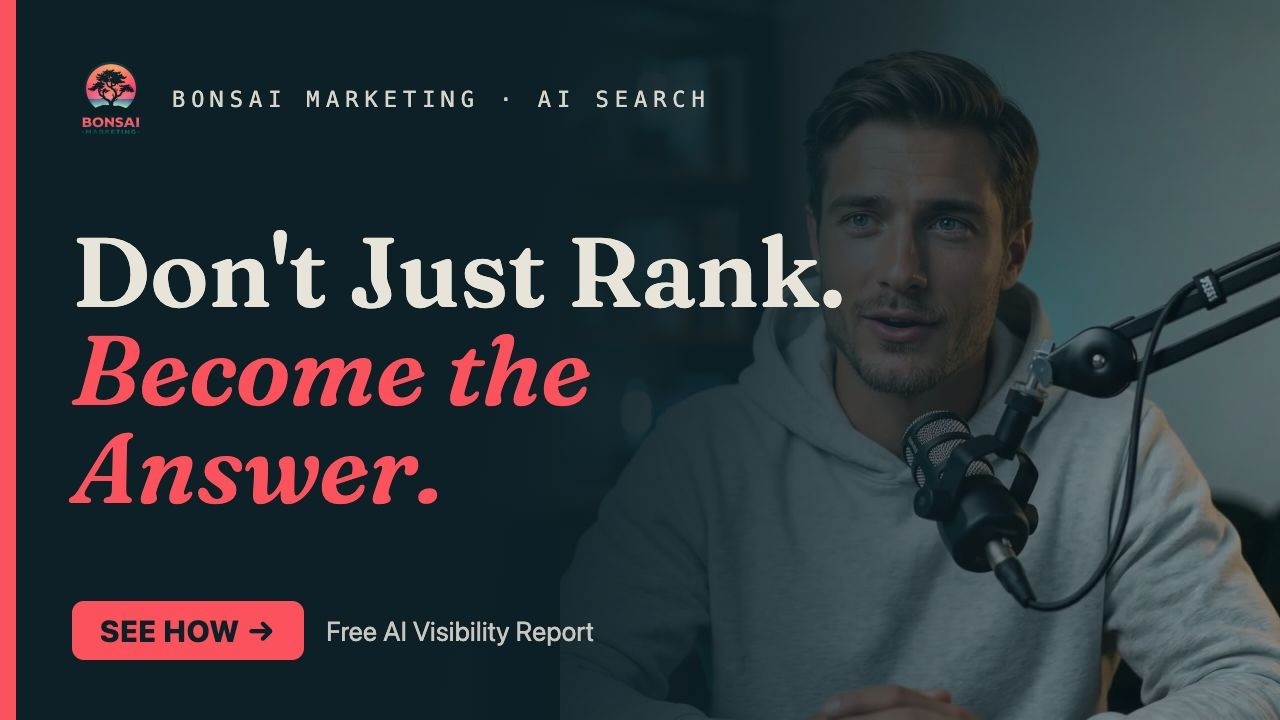
Don’t just rank. Become the answer. That is the new standard, and the time to build toward it is now.
Answered.
Why isn't ranking on Google enough anymore? +
Consumers are increasingly skipping traditional search and asking AI engines like ChatGPT, Gemini, and Siri for direct recommendations. If your business isn't appearing in those AI-generated answers, you're invisible to a fast-growing segment of buyers regardless of your Google rankings.
How does an AI search engine decide which business to recommend? +
AI engines evaluate your digital foundation — the consistency of your business information, the quality and volume of your reviews, your structured data, and the depth of expertise demonstrated on your website. When those signals are strong and coherent, the AI has the confidence to recommend you. When they're fragmented, it recommends someone else.
What is an AI visibility assessment and why do I need one? +
An AI visibility assessment measures whether AI engines like ChatGPT, Gemini, and Perplexity are actually surfacing your business in relevant conversations. It reveals gaps in your digital foundation that prevent AI from trusting — and recommending — you to potential customers.
How can I quickly test my own AI search visibility? +
Open ChatGPT and ask who the best provider in your industry is near your city. Repeat the question three different ways and note whether your business appears. If it never shows up, your digital foundation needs work before AI will recommend you.
Is AI search optimization different from traditional SEO? +
The goal shifts from earning a click to becoming the definitive answer. While traditional SEO targets rankings and keyword placement, AI search optimization focuses on building the structured, trustworthy digital presence that gives AI engines the confidence to cite your business by name.