Before You Buy An AI Agent, Ask These 3 Questions
750,000 people a month search for AI agents — and most are paying chatbot prices for chatbot results. Here is how to tell the difference before you buy.
750,000 people a month search for AI agents — and most are paying chatbot prices for chatbot results. Here is how to tell the difference before you buy.
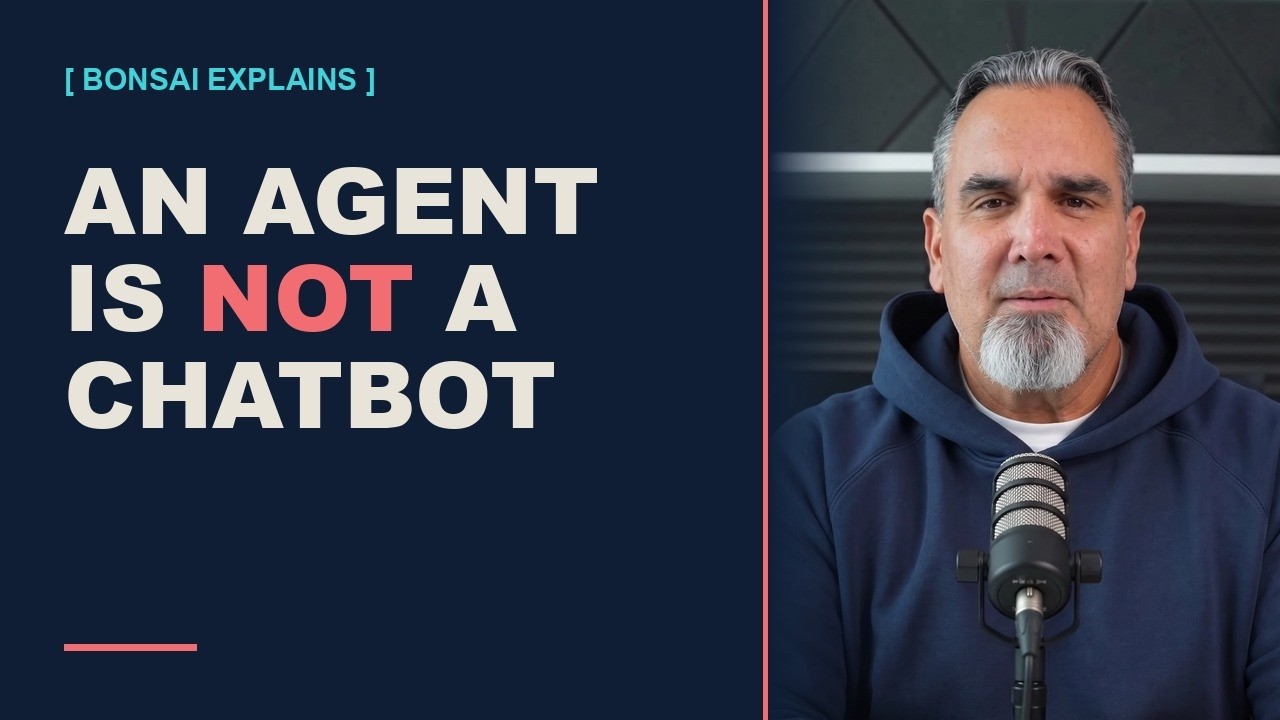
A chatbot produces words and stops — an agent completes tasks by taking real actions inside your systems.
The value of an agent is determined by the quality of tools and data you connect it to, not by which AI model powers it.
An agent that can act can also act wrongly — the blast radius of a mistake is far larger than a chatbot hallucination.
Every well-deployed agent has three things: a narrow job, hard boundaries on what it may touch, and a human checkpoint before anything irreversible goes out.
Before buying, ask three questions: What is its one job? What systems can it read and write? And what can it do without human approval?
750,000 people a month are searching for AI agents. Most of them are going to buy the wrong thing — and pay for it twice.
The confusion is understandable. Chatbots and agents are often sold in the same conversation, priced similarly, and described with the same vocabulary. But they are fundamentally different products, and conflating them is one of the more expensive mistakes a business owner can make right now.
The One-Sentence Difference
A chatbot answers. An agent acts.
That sentence is clean, but it needs weight behind it. A chatbot is a conversation. You ask, it produces words, and then it stops. Everything that happened occurred inside the chat window. That is genuinely useful — explaining things clearly has real value — but it is bounded. When the conversation ends, nothing in your business has changed.
An agent has hands. It is given a goal and a set of tools it is permitted to use, and it goes and does things. It can read your inbox, check your CRM, look up a contact, draft a reply in your voice, and put it in a queue for review — all before a person has touched a keyboard. The completed task is the product, not the conversation.
What Actually Determines Value
This is the part most vendors will not tell you: the model underneath matters far less than the tools around it.
An extremely capable AI with no access to your systems is a well-read intern with no login. A more modest model wired properly into your calendar, CRM, and phone system will outperform it — because it can actually finish things.
Before you evaluate any agent on intelligence, evaluate it on access. What can it read? What can it write? That is where the value lives.
The Risk Is Real — and Proportional
Something that can act can act wrongly. That is not a reason to avoid agents — it is a reason to deploy them carefully.
A chatbot that hallucinates says something wrong to one person. An agent that hallucinates can email the wrong quote to 40 people, update 200 records incorrectly, or cancel an appointment. Same underlying error. Completely different blast radius.
Every agent worth deploying has three things locked in from day one: a narrow job, a hard boundary on what it may touch, and a human checkpoint before anything irreversible or outward-facing happens.
What a Good One Looks Like
It is not exciting. That is intentional.
A new lead comes in. The agent reads it, checks whether the person has contacted you before, identifies which service they are asking about, drafts a reply in your voice with the right pricing range, and puts it in a queue. A person glances at it and hits send. Response time drops from six hours to four minutes. Nobody typed anything.
That is the model. The agent uses tools, makes a decision, and a human stays on the send button — because that email leaves the building.
The Three Questions to Ask Before You Buy
When someone tries to sell you an AI agent, ask these before you agree to anything:
- What is its one job?
- What systems can it read and write?
- What can it do without a human approving it?
If the third question does not get a crisp, specific answer, you are not being sold an agent. You are being sold a demo.
Start with something reversible and internal. Let it prove itself for a month. Then widen the boundary slowly — based on what it actually got right, not what was promised in the pitch deck.
The businesses that get this right early will have a compounding operational advantage that gets harder to close the longer everyone else waits.
Answered.
What is the difference between an AI chatbot and an AI agent? +
A chatbot answers questions inside a conversation and stops when the chat ends. An AI agent is given a goal and a set of tools, and it goes out and does things — reading inboxes, updating CRM records, checking calendars, sending emails — until the task is complete.
What makes an AI agent valuable for a business? +
Value comes almost entirely from the quality of systems and data you connect the agent to. A capable model with no access to your tools is just a well-read intern with no login. A modest model wired into your calendar, CRM, and phone system will outperform it because it can actually finish things.
What are the risks of using an AI agent? +
Because agents act, their mistakes have a much larger blast radius than a chatbot error. A chatbot hallucination reaches one person. An agent that acts on bad data can email the wrong quote to 40 people or update 200 records incorrectly. Narrow scope, hard system boundaries, and human checkpoints before irreversible actions are non-negotiable.
How do I know if someone is selling me a real AI agent or just a demo? +
Ask three questions: What is its one job? What systems can it read and write? And what can it do without a human approving it? If the third question does not get a crisp answer, you are being sold a demo, not a deployed agent.
How should a business start with AI agents? +
Start with something reversible and internal. Give the agent a narrow task, let it prove itself for a month, then slowly widen its permissions based on what it actually got right — not based on what the vendor promised.