Before You Buy An AI Agent, Ask These 3 Questions
750,000 people a month search for AI agents — and most are buying the wrong thing. A chatbot answers. An agent acts. Here is how to tell the difference before you spend a dollar.
750,000 people a month search for AI agents — and most are buying the wrong thing. A chatbot answers. An agent acts. Here is how to tell the difference before you spend a dollar.
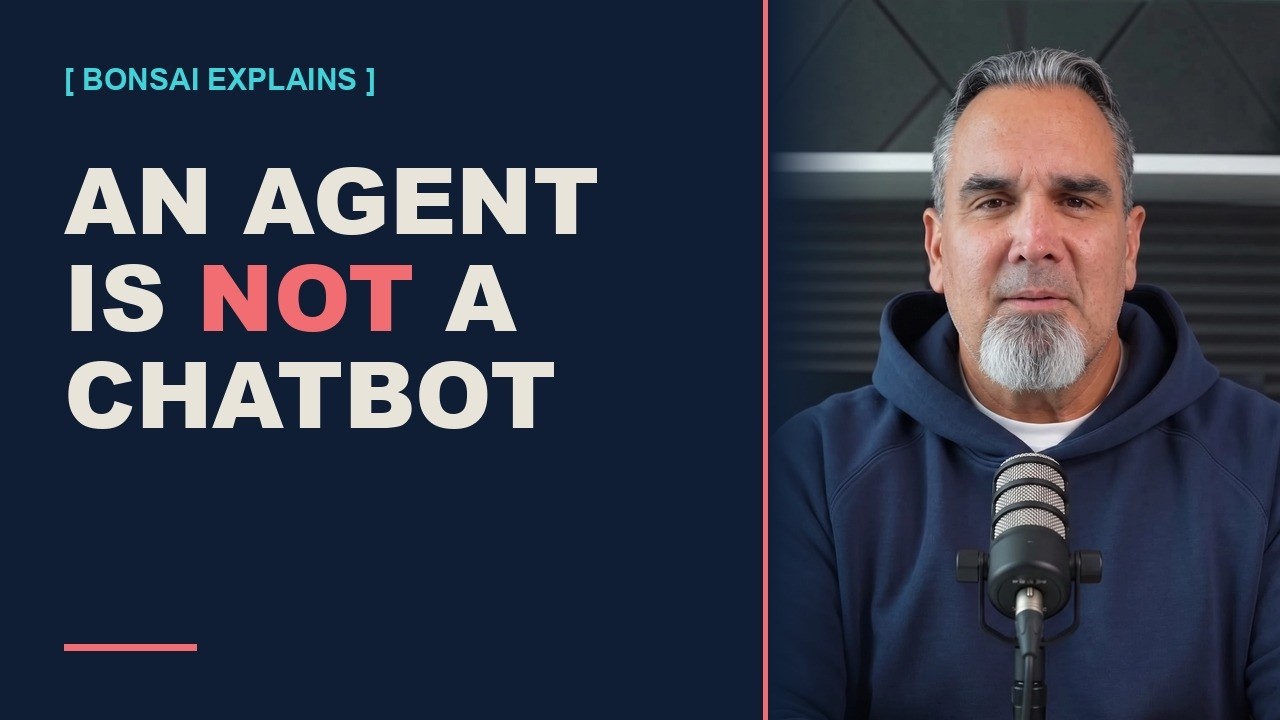
A chatbot produces words and stops — an agent completes tasks by using tools connected to your real systems.
The value of an AI agent is determined almost entirely by the quality of the tools and data you wire it to, not by the underlying model.
An agent that hallucinates has a vastly larger blast radius than a chatbot — one wrong action can affect hundreds of records or contacts simultaneously.
Every deployable agent needs three things: a narrow job, hard limits on what it can touch, and a human checkpoint before anything irreversible goes out.
When evaluating an agent, ask: What is its one job? What can it read and write? And what can it do without human approval?
Most businesses buying AI agents right now are buying the wrong thing — and they are paying agent prices for chatbot results. That is not a vendor problem. It is a clarity problem. Once you understand what separates the two, the buying decision becomes obvious.
A Chatbot Answers. An Agent Acts.
A chatbot is a conversation. You ask, it responds, and then it stops. Everything it did happened inside the chat window. That is genuinely useful — clear explanation has real value — but it is bounded. When the conversation ends, nothing in your business has changed.
An agent has hands. It receives a goal and a toolkit, and it goes to work. It can read your inbox, pull a record from your CRM, cross-reference a calendar, draft a reply in your voice, and check whether the task succeeded before moving on. The conversation is not the product. The completed task is.
The Model Is Not the Point
Here is where most AI buying decisions go sideways. People evaluate agents by which model is underneath — GPT-4, Gemini, Claude — as if raw intelligence is what determines results. It is not.
An extremely capable model with no access to your systems is a well-read intern with no login. A modest model wired cleanly into your calendar, your CRM, and your phone system will outperform it consistently, because it can actually finish things. The value of an agent is almost entirely determined by the quality of what you connect it to.
The Risk Is Real — Size It Correctly
Something that can act can act wrongly. That is not a reason to avoid agents. It is a reason to deploy them carefully.
A chatbot that hallucinates says the wrong thing to one person. An agent that hallucinates can email an incorrect quote to 40 prospects, update 200 records with bad data, or cancel a customer’s appointment. Same underlying error. Completely different blast radius.
This is why every agent worth deploying is built with three non-negotiable constraints:
- A single, narrow job — not a broad mandate
- Hard limits on what systems it may read or write
- A human checkpoint before anything irreversible or outward-facing executes
What a Good Agent Actually Looks Like
Not exciting — deliberately. A new lead comes in. The agent reads it, checks your CRM for prior contact, identifies the relevant service, drafts a reply in your voice with accurate pricing, and drops it in a queue. A human glances at it and hits send. Response time drops from six hours to four minutes. Nobody typed anything.
That is the shape of a trustworthy first deployment. It uses tools. It makes decisions. And a human stays on the send button because the email leaves the building.
Three Questions Before You Buy
When someone tries to sell you an AI agent, ask these before you agree to anything:
What is its one job? If the answer covers three things, it is not an agent — it is a prototype.
What systems can it read and write? The answer tells you whether it can actually finish tasks or just describe them.
What can it do without a human approving it? If the seller hesitates or goes vague, you are being sold a demo.
Start with something reversible and internal. Give it a month to prove itself. Expand its access only based on what it actually got right — not on what the pitch deck promised.
The businesses that deploy agents well right now will have a structural speed advantage that compounds every quarter they stay ahead.
Answered.
What is the difference between an AI agent and a chatbot? +
A chatbot answers questions inside a conversation window and stops there. An AI agent has been given a goal and a set of tools — it can read your CRM, check calendars, send emails, and update records. The product of a chatbot is a response. The product of an agent is a completed task.
What makes an AI agent actually valuable? +
Access to your real systems. A powerful model with no connection to your calendar, CRM, or inbox is essentially a well-read intern with no login. A modest model wired correctly into those systems will outperform it every time because it can actually finish things.
What are the risks of using an AI agent? +
Anything that can act can act wrongly. A chatbot hallucination reaches one person. An agent hallucination can email the wrong quote to 40 people or corrupt 200 records. That difference in blast radius is why every serious agent deployment needs strict boundaries and human checkpoints.
What three questions should I ask before buying an AI agent? +
Ask: What is its one job? What systems can it read and write? And what can it do without a human approving it? If the seller cannot answer that third question clearly, you are looking at a demo, not a deployable agent.
How should a business start with AI agents? +
Start with something reversible and internal. Give it one narrow job, watch it for a month, and widen its access only based on what it actually got right. Prove it earns trust before you let it touch anything outward-facing.