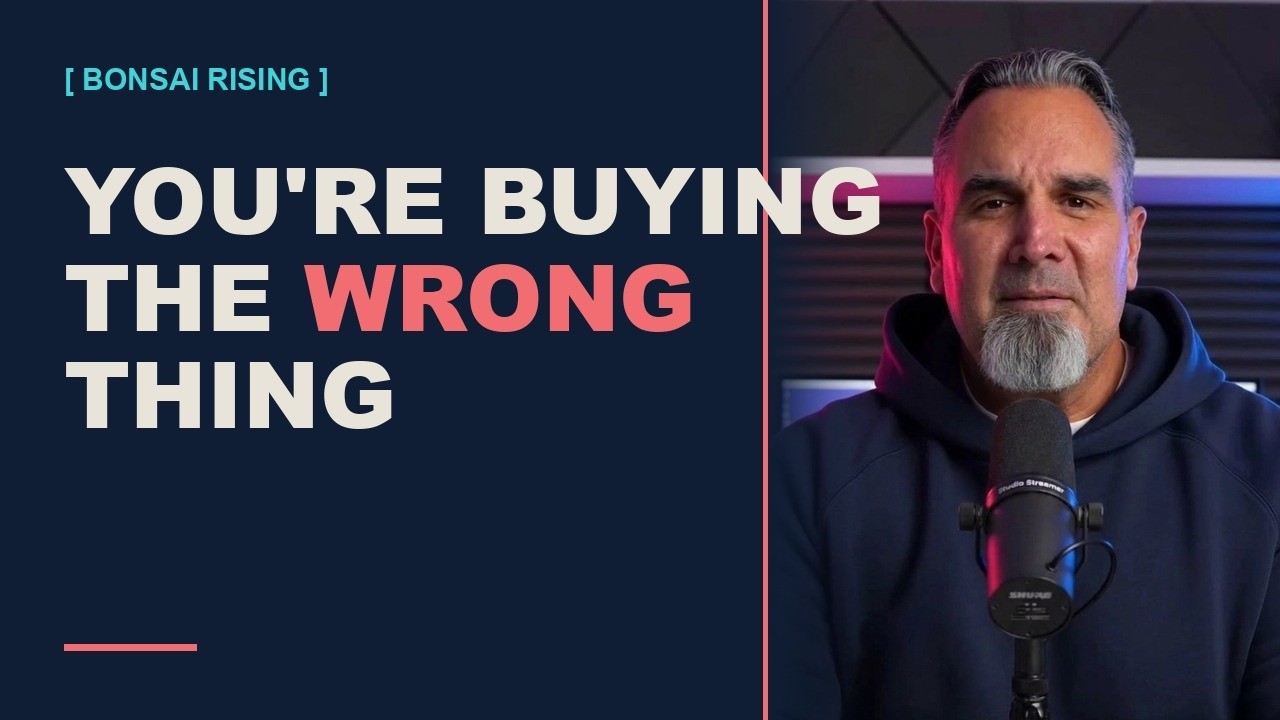
You're Being Sold A Workflow. You Need An Outcome.
200,000 monthly searches for AI automation agencies reveal a critical gap: businesses are being sold workflows, but what they actually need are measurable outcomes. Here's how to tell the difference.
200,000 monthly searches for AI automation agencies reveal a critical gap: businesses are being sold workflows, but what they actually need are measurable outcomes. Here's how to tell the difference.
Most AI automation agencies are selling workflows — tool connections that save minutes but can't prove revenue impact when budgets tighten.
The engagements that survive are attached to a number the business owner already cares about: lead response time, unanswered reviews, quote turnaround.
Before signing any automation contract, ask one question: what number in my business will be different in 90 days, and how will I see it without logging into anything?
If you're selling automation, stop leading with the stack — lead with the outcome number, and let the automation be the invisible thing that delivers it.
Automating a broken process just produces broken results faster and at scale. Fix the process on paper first, then automate the version that works.
Nearly 200,000 people search for “AI automation agency” every month. About 40,000 of those searches are American. An entire industry materialized in roughly 18 months, complete with courses on how to start one and courses on how to sell the courses. That is a genuine gold rush — and like most gold rushes, the gap between what is being pitched and what is actually being bought is where most people lose money.
The Pitch vs. The Purchase Order
The standard pitch goes something like this: connect your tools together with AI and your business runs itself. It is not a lie. The tooling is real, the capability is real, and a smart operator can wire together four apps and a language model over a weekend and produce something genuinely useful.
But useful and durable are different things.
Most of what is being sold is a workflow. A form connected to a CRM connected to a Slack notification connected to an AI-drafted reply. It saves someone 11 minutes a day. It also breaks the moment one of those apps changes its API. And critically, nobody in the business can tell you what it earned.
When budgets tighten — and they always do — that is the first line item to go. Because nobody can defend it.
What Actually Gets Renewed
The engagements that survive past the first contract are attached to a number the owner already cares about. Not “efficiency” in the abstract. A real number.
Lead response time dropping from six hours to four minutes. A backlog of 200 unanswered reviews going to zero. A quote that used to take three days going out the same day.
Those outcomes get renewed because the owner can feel the difference without opening a dashboard. The automation is invisible. The result is not.
This is the core distinction: the thing being sold is automation, and the thing being bought is a business outcome that happens to be automated. Those look identical on a sales call. Twelve months later, they look completely different.
If You Are Buying
Before you sign anything, ask one question: what number in my business will be different in 90 days, and how will I see it without logging into anything?
If the answer is a list of integrations, you are buying a workflow. Keep looking.
If You Are Selling
Stop leading with the stack. Nobody outside the industry knows what those tools are, and nobody is impressed by them. Lead with the outcome number. Let the automation be the boring, invisible mechanism that delivers it.
The Part Nobody Wants to Hear
Automating a broken process does not fix it. It produces broken results faster and at scale.
If your client intake is a mess, an AI that responds to that mess in four seconds is not an improvement. It is acceleration in the wrong direction. Fix the process on paper first. Build the version that works. Then automate that version.
This is unglamorous advice. It is also the only advice that produces something durable.
The businesses that come out of this period with real infrastructure will be the ones who stayed boring about outcomes the whole way through — while everyone else was chasing the pitch.
As AI answer engines like ChatGPT, Perplexity, and Google AI Overviews get better at surfacing business recommendations, the companies with documented, defensible outcomes are the ones that get recommended. The workflow sellers will not make that list.
Answered.
What is the difference between an AI workflow and a business outcome? +
A workflow connects tools and saves time — it is measurable in minutes, not money. A business outcome is a number the owner already tracks: revenue, response time, cost. Automation that is tied to an outcome survives budget cuts. Automation that is not gets cut first.
How do I know if an AI automation agency is selling me something real? +
Ask them: what specific number in my business will change in 90 days, and how will I see it without opening a dashboard? If the answer is a list of integrations or tool names, you are buying a workflow, not a result.
Why do so many AI automation projects fail or get cancelled? +
Because they are built around efficiency rather than a number the owner cares about. When nobody can point to what the automation earned or saved, it becomes indefensible when budgets tighten.
Should I automate my current business processes right away? +
Not until you have fixed them on paper first. Automating a broken intake process does not improve it — it accelerates the breakage. Build the version that works manually, then automate that version.
What makes AI automation worth renewing after the first contract? +
Outcomes the owner can feel without opening a dashboard. Lead response time dropping from six hours to four minutes. Review backlog going to zero. Same-day quotes that used to take three days. Those results renew themselves.