This Trend Died In 72 Hours. Here's The Lesson.
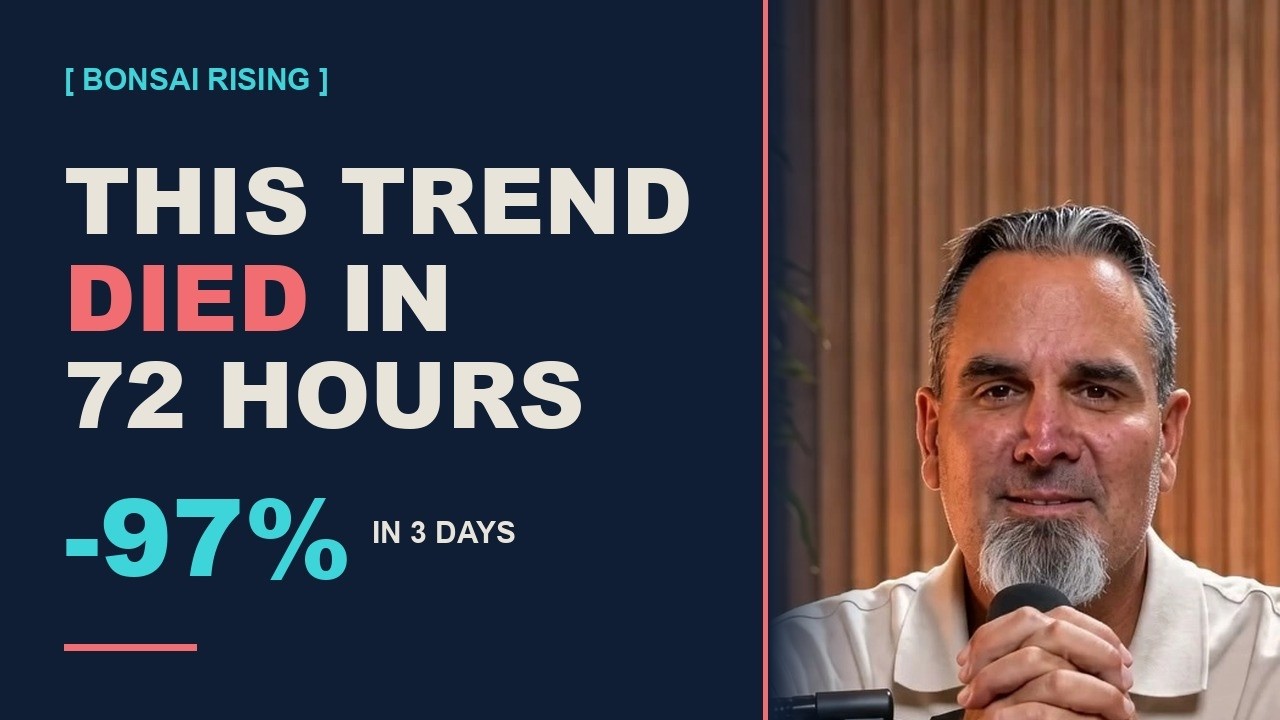
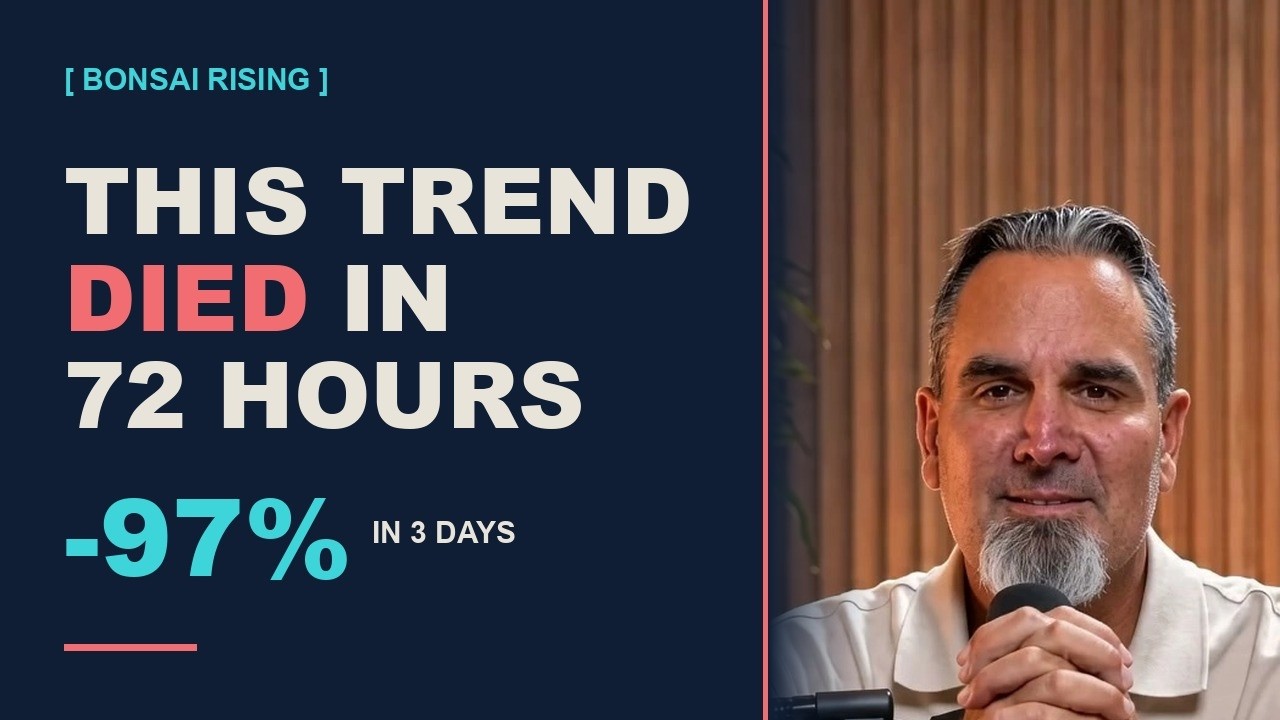
A YouTube algorithm spike hit 22,634 views/hour on July 31st and collapsed 97% in 72 hours. The real opportunity was never the spike — it was the 340,000/month keyword sitting quietly beneath it.
A YouTube algorithm spike hit 22,634 views/hour on July 31st and collapsed 97% in 72 hours. The real opportunity was never the spike — it was the 340,000/month keyword sitting quietly beneath it.
Panic-driven search spikes have a half-life — the demand evaporates once people find an answer or lose interest, often within 72 hours.
A competition score of 22 on a 340,000/month keyword is not a trend, it is a business asset that compounds over time.
Most content creators chase spikes because they are loud; durable businesses are built by farming the floor — the steady, evergreen demand beneath the noise.
The only reason you can move fast on a spike is because you already have the audience, the publishing habit, and the foundation in place before it hits.
The spike does not create the opportunity — it cashes in the one you already built by doing the slower, quieter work first.
Most people saw the YouTube algorithm story and thought: opportunity. They were right — for about 72 hours. Then the room emptied.
On July 31st, content covering YouTube’s algorithm update was pulling 22,634 views per hour. By day three, that number had fallen to 582. A 97% collapse. The creators who hit publish on day four spent their time talking to no one.
This is not a story about being too slow. It is a story about building on sand.
Two Types of Demand — Only One Builds a Business
Search demand comes in two forms, and confusing them is one of the most expensive mistakes a marketing team can make.
A spike is a moment. It is driven by news cycles, platform changes, viral panic, or collective curiosity. It feels enormous because it is loud. But panic has a half-life. People search when they are scared or confused. They find an answer, or they move on — and the demand disappears.
A floor is a business. It is the steady, month-over-month volume that exists whether or not anything exploded in the news cycle that week.
While the YouTube algorithm spike was dominating feeds and headlines, a quieter keyword sat underneath it: how to grow on YouTube. That term runs at 340,000 searches per month with a competition score of 22. It was there last year. It will be there next year. Almost nobody was talking about it during the spike — because floors are not loud.
The Real Skill Is Knowing Which Trends Are Worth Your Tuesday
Spotting trends is not the skill. Everyone sees them. The actual skill is evaluating whether a trend connects to durable demand or evaporates the moment the news cycle moves on.
Here is a practical test you can run in under 10 minutes:
- Take the last thing that blew up in your industry — a regulation change, a viral tool, a competitor announcement.
- Check whether the search interest is still present today.
- If it is gone, that was a moment. If you built content around it and nothing else, you built on sand.
- Now find the question your audience was asking before the spike and is still asking now. That is your floor.
Build there first. Always.
Why the Foundation Has to Come Before the Spike
The spike does not create the opportunity. It cashes in the one you already built.
When you have an audience, a publishing cadence, and established authority on a topic, you can move on a trending story in a day and actually reach people. Without that foundation, you are a new account posting into a collapsing wave. The timing will always be wrong because the infrastructure was never there.
This is why sustainable content operations run two tracks simultaneously: one that catches moments, and one that builds the floor. Neither track works without the other, but the floor is always the priority. The moment track only pays off when you already own the ground beneath it.
What to Do With This
Stop measuring content success by the loudness of the moment it entered. Measure it by whether the demand it targets will still exist in six months.
Find the questions your customers are asking right now — not because something exploded, but because the problem is real and persistent. A competition score of 22 on 340,000 monthly searches is not a trend. It is an underpriced asset sitting in plain sight.
Build the floor. Farm it consistently. And when a spike lines up with the expertise you have already earned, move fast — because you will be the only one in the room with something real to say.
The businesses that compound visibility over time are not the ones chasing every alert. They are the ones who already knew the answer before the question went viral.
Answered.
What is the difference between a search spike and a search floor? +
A spike is a sudden surge in demand driven by news, panic, or novelty — it typically collapses within days. A floor is steady, recurring monthly search volume that exists before, during, and after any trending moment.
Why did YouTube algorithm content drop 97% in 72 hours? +
Because the demand was panic-driven. When YouTube changed its algorithm, users searched frantically for answers. Once they found one or lost interest, the search volume evaporated — dropping from 22,634 views per hour to 582 in three days.
How do I find the floor keyword in my market? +
Look at what your customers were searching before the trend hit and are still searching now. That persistent question with consistent monthly volume is your floor. Build your content strategy around it first.
Should businesses ever chase trending topics? +
Yes, but only when a spike aligns with something you already have authority on. If you have the foundation built, you can move on a spike in a day and then return to the floor. Chasing spikes without a floor means publishing into an empty room.
What does a competition score of 22 mean for a 340,000/month keyword? +
It means the keyword has high search demand with relatively low competition — a rare combination. For content creators and businesses, that signals a durable opportunity that most people are overlooking in favor of noisier, short-lived trends.