This Trend Died In 72 Hours. Here's The Lesson.
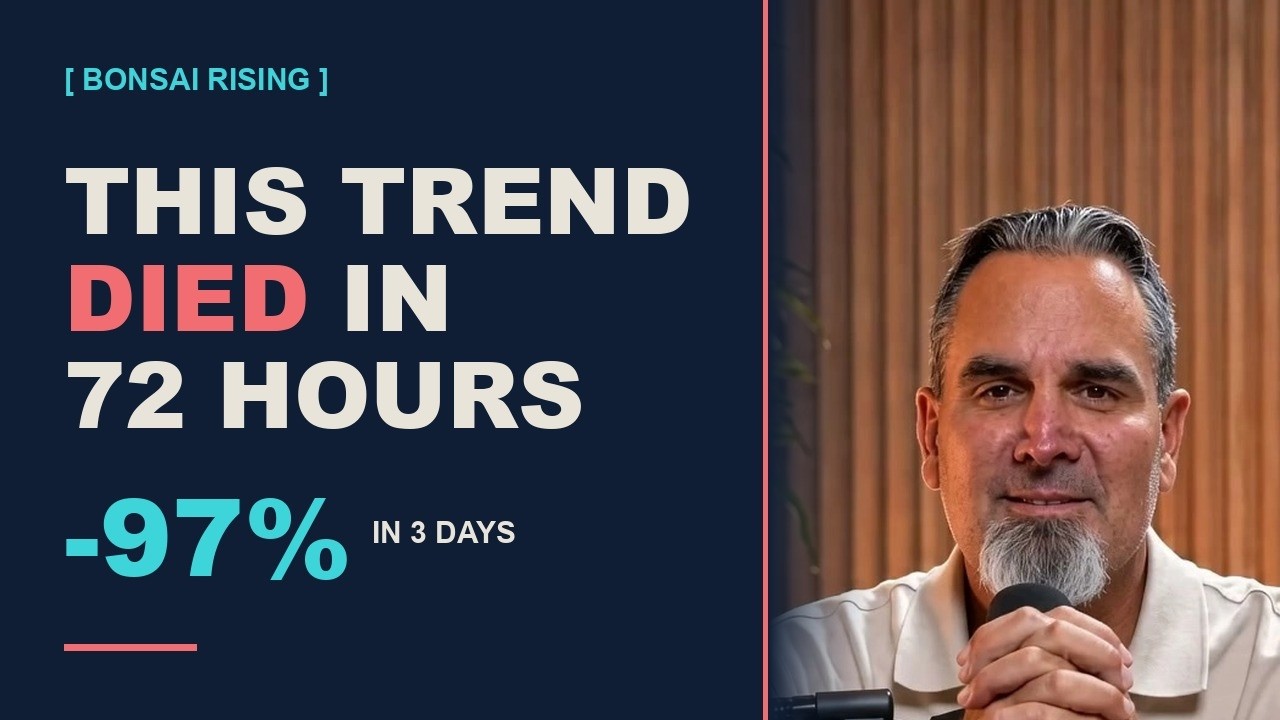
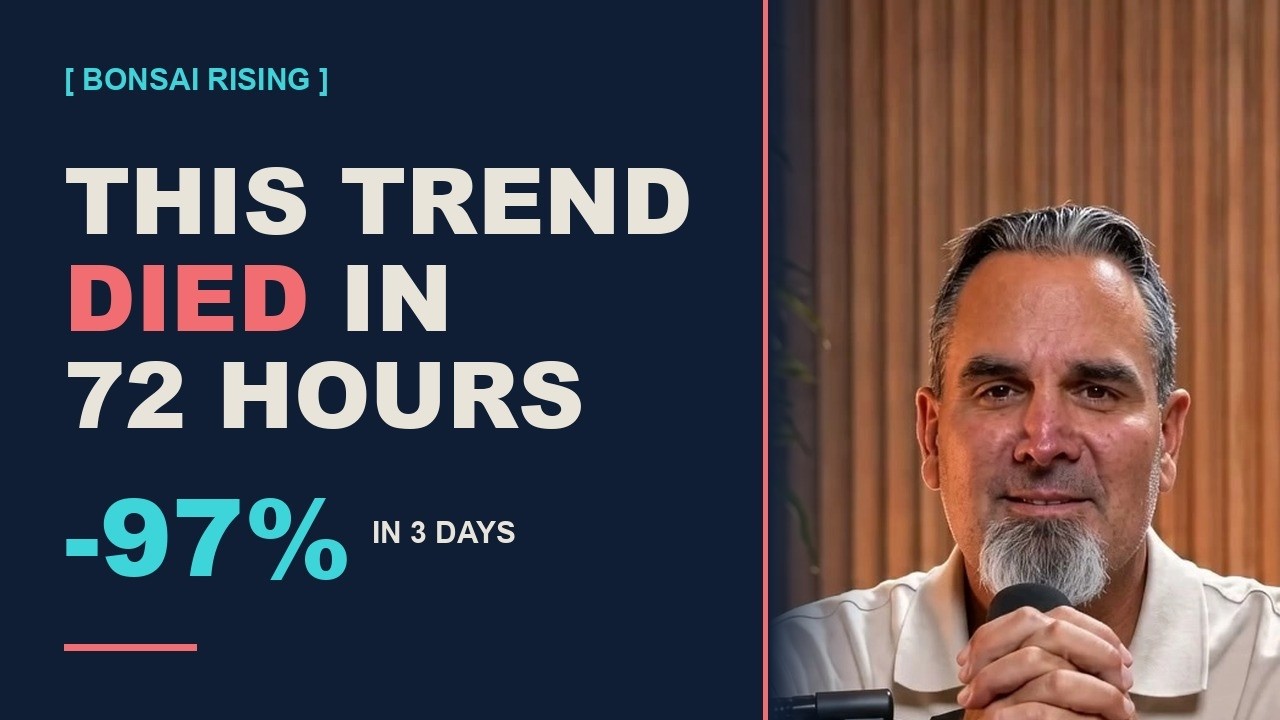
A YouTube algorithm spike hit 22,634 views/hour then collapsed 97% in 72 hours. The real opportunity was always the 340,000/month keyword sitting quietly underneath it.
A YouTube algorithm spike hit 22,634 views/hour then collapsed 97% in 72 hours. The real opportunity was always the 340,000/month keyword sitting quietly underneath it.
Viral spikes are moments — they have a half-life measured in hours, not months.
A keyword pulling 340,000 searches/month with a competition score of 22 is a floor, not a flash — it was there last year and will be there next year.
Publishing on day four of a trend means arriving to an empty room; the window is 72 hours or less.
The skill is not spotting trends — it is knowing which ones are worth your Tuesday.
The spike does not create the opportunity. It cashes in the one you already built through consistent floor-level content.
Most content creators saw the same YouTube algorithm story last month. Searches exploded overnight, views piled up, and the topic was everywhere. What almost nobody noticed was what happened 72 hours later.
The views on algorithm content dropped from 22,634 per hour to 582. A 97% collapse in three days. The people who published on day four walked into an empty room.
Panic Has a Half-Life
Every time a major platform changes something, a predictable sequence plays out. Users panic, searches spike, content floods in, and then the curiosity resolves — either through answers or through boredom — and the demand evaporates.
That is not a bug in the system. It is exactly how attention works. The spike was real. The traffic was real. But it was a moment, not a market.
Understanding that distinction is what separates businesses that build durable audiences from ones that are permanently sprinting after the next thing.
The Floor Underneath the Noise
While the algorithm panic was peaking and crashing, a quieter keyword was doing something far more interesting: nothing dramatic at all.
Searches for how to grow on YouTube run at 340,000 per month. Competition score: 22. That is remarkably low for that volume. It was there before the algorithm story broke and it will be there long after everyone has moved on to the next platform crisis.
That is a floor. Not a flash.
Two Types of Demand
Spike demand is driven by emotion — usually fear or urgency. It is loud, fast, and shallow. Floor demand is driven by persistent need. People wake up with the same problem this Tuesday that they had last Tuesday.
Most marketing chases the spike because the spike feels like opportunity. It is visible, it is measurable in real time, and it rewards fast movers. But the floor is where audiences are actually built — because the floor compounds. Every piece of content you put on a floor keyword keeps working next month, next quarter, next year.
The Only Reason You Can Move on a Spike
Here is what the creators who profited from the algorithm moment had in common: they did not build their authority that week. They had already been publishing on the floor. The spike let them cash in an asset they had been building for months.
If you have no floor, you have nothing to cash in. You are just one of hundreds of reactive publishers showing up late to a party that is already ending.
Run This on Your Own Market
Take the last topic that exploded in your industry — a regulation change, a viral competitor, a new tool. Then ask two questions:
- Is the search interest still there today, or is it gone?
- What was the underlying question your customers were asking before the noise, and are they still asking it?
If the interest collapsed, that was a spike. The underlying question — the one that persists — is your floor. Build there first, and build consistently.
Know Which Is Which
The actual skill in content strategy is not trend-spotting. It is discernment. Knowing which trends are worth 48 hours of your team’s attention and which ones are just loud. Knowing when to jump on a spike and when to stay in your lane and keep farming the floor.
One catches the moment. One builds the business. You need both — and you need to know exactly which one you are doing at any given time.
The businesses that will dominate search and AI-generated answers over the next few years are the ones building floors right now, while everyone else is still chasing noise.
Answered.
What is the difference between a search spike and a search floor? +
A spike is a surge of interest tied to a news moment or platform change — it evaporates in days. A floor is consistent, recurring demand that exists month after month regardless of what is trending. Spikes are moments; floors are businesses.
How fast do trending search topics lose traffic? +
Extremely fast. In this example, YouTube algorithm content went from 22,634 views per hour to 582 in just 72 hours — a 97% collapse. Most trend-chasing content published after day two reaches a nearly empty audience.
How do I find the search floor in my industry? +
Take the last thing that blew up in your market, then check whether the search interest is still present today. If it is gone, that was a spike. Find the underlying question people were asking before and after the noise — that persistent question is your floor.
Should businesses ever chase trending topics? +
Yes, but only when you already have the foundation in place. If you have an established audience, a publishing habit, and floor-level content already working, jumping on a relevant spike for 24 to 48 hours is a smart amplification move — not a strategy by itself.
Why does consistent content matter more than trending content? +
Consistent content builds the audience, authority, and publishing infrastructure that makes trend-response possible. Without the floor, you have nothing to cash in when a spike arrives.