The AI Price Collapse Nobody Is Talking About
Two obscure AI models just hit 9,000% search growth — and the reason matters for your bottom line. The price floor on capable AI just collapsed, and the automation decisions you said no to last year deserve a second look today.
Two obscure AI models just hit 9,000% search growth — and the reason matters for your bottom line. The price floor on capable AI just collapsed, and the automation decisions you said no to last year deserve a second look today.
The cost of running capable AI has dropped so dramatically that tasks once priced as enterprise line items are now accessible to small and mid-size businesses.
Qwen 3 and Kimi 3 spiked in search because developers are racing to find what they can now build that was too expensive just last quarter — that race has direct implications for business owners.
Every major small business technology shift follows the same pattern: something expensive becomes cheap, then normal — and the businesses that move during the cheap-but-weird window end up owning the category.
The opportunity is not chasing the newest model — it is repricing the automation decision you already made and rejected because the quote was too high eight months ago.
Cheap does not mean good or secure — the real skill is knowing which jobs warrant a premium model, which are fine on a budget option, and which should never touch AI at all.
The price floor on capable AI just fell out — and most small business owners have not been told.
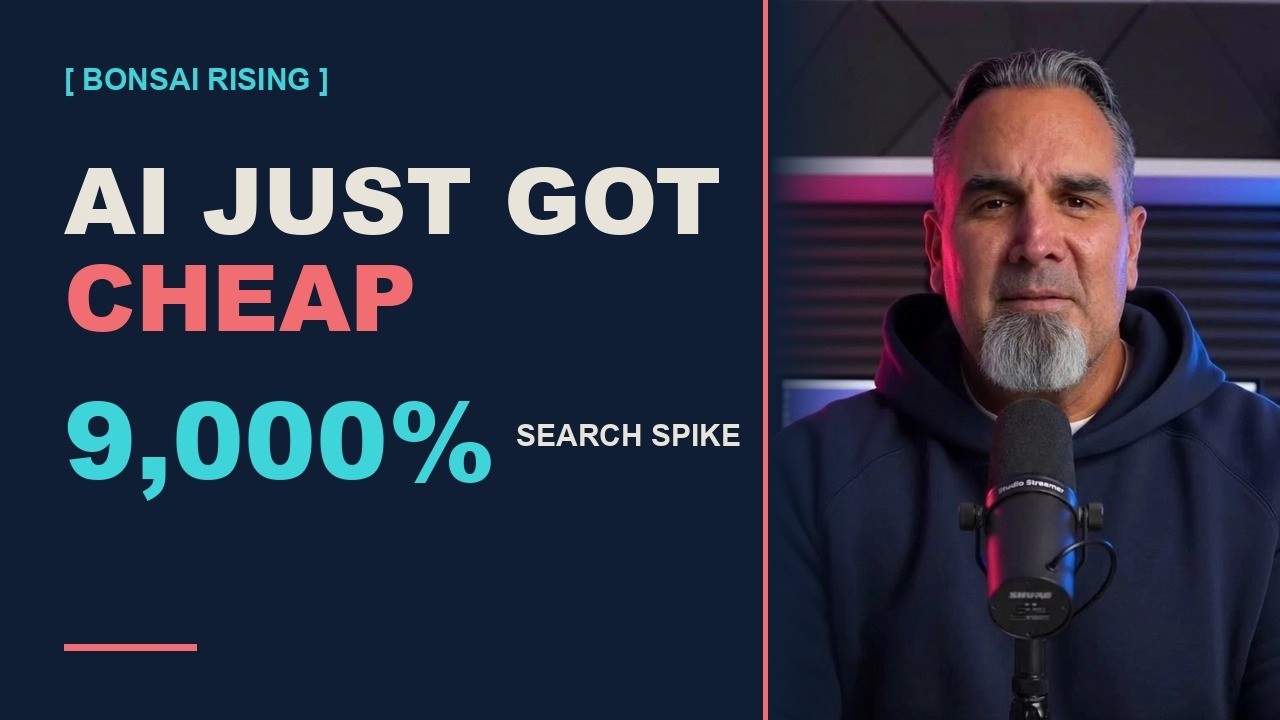
Two AI models most people have never heard of, Qwen 3 and Kimi 3, spiked over 9,000% in YouTube search this month. That number is not the story. The story is why — and what it means for decisions you already made and walked away from.
What Actually Changed
For roughly three years, AI capable of doing real business work was expensive. Reading your inbox, scoring inbound leads, drafting proposals, answering your phone at 11 p.m. — that level of capability meant paying premium rates to one of a handful of American providers. That price floor is exactly why most AI tools built for small business were thin: a chatbot dressed up with a nice logo and a monthly fee.
A wave of open models — out of China and several research labs — changed the math. These models perform close enough to the expensive ones for ordinary business work, and they cost a fraction to run. Some run on your own hardware for the price of electricity.
Developers noticed immediately. The search spike is them racing to figure out what they can now build that was too expensive last quarter.
The Pattern You Have Seen Before
Every real shift in small business technology has followed the same shape. Something expensive becomes cheap. Cheap becomes normal. And the businesses that moved during the cheap but weird window ended up owning the category.
Websites did this. Google Ads did this. Online reviews did this. The business owners who look like visionaries today are mostly people who moved early and then stayed consistent for four years while everyone else debated whether it was worth it.
We are in that window right now.
What the New Math Unlocks
None of the following capabilities were invented this month. They got affordable this month.
- Lead intelligence: AI that reads every inbound lead, scores it by fit, and drafts a personalized reply — this was an enterprise line item a year ago. Today it is a rounding error.
- Call transcription and summaries: Automatically documented, searchable, actionable.
- Content repurposing: One long video or recording turned into 30 pieces of content at a cost that no longer requires a budget meeting.
- Review management: An assistant that monitors your reviews and drafts responses in your voice, around the clock.
Your One Actionable Step
Go find the task you already priced out and said no to. Not the exciting one — the boring, repetitive, hours-eating one that an employee does 40 times a week. Write it on a sticky note. Then price it again today.
The quote you received eight months ago may be off by an order of magnitude. The only reason you have not moved is that nobody told you the price changed.
Cheap Is Not the Same as Good
This needs to be said plainly: affordable does not mean appropriate for every job. Some of these models should not be anywhere near your customer data. The skill that matters going forward is not knowing every model name — it is knowing which jobs justify the premium model, which jobs run fine on a budget option, and which jobs should not touch AI at all.
That is a judgment call. And judgment is still the part you are paid for.
The businesses that get this right will not be the ones chasing the newest release — they will be the ones quietly repricing decisions they already made and building systems while everyone else is still debating whether AI is overhyped. The window is open now; it will not stay cheap and weird forever.
Answered.
Why did Qwen 3 and Kimi 3 spike 9,000% in search? +
Developers and founders are racing to find what they can now build affordably. These open models perform close enough to premium options for ordinary business tasks and cost a fraction to run — some on your own hardware for the price of electricity.
How does the AI price drop affect small business owners? +
Tasks like lead scoring, personalized reply drafting, call transcription, review response, and content repurposing were enterprise-level expenses a year ago. At current model pricing, they are rounding errors for most businesses.
What should I actually do right now in response to falling AI costs? +
Find the one repetitive, time-consuming task you already said no to because the tool cost too much. Price it again today — there is a strong chance the quote you got eight months ago is now off by an order of magnitude.
Are cheap AI models safe to use with customer data? +
Not always. Some open models should not be anywhere near sensitive customer information. The judgment call of which model fits which job — and which jobs should avoid AI entirely — is still a human responsibility.
Is this the right time to invest in AI automation for my business? +
If history is a guide, yes. Websites, Google Ads, and online reviews all followed the same curve — expensive, then cheap and weird, then table stakes. The businesses that moved early during the cheap-but-weird window ended up owning their categories.