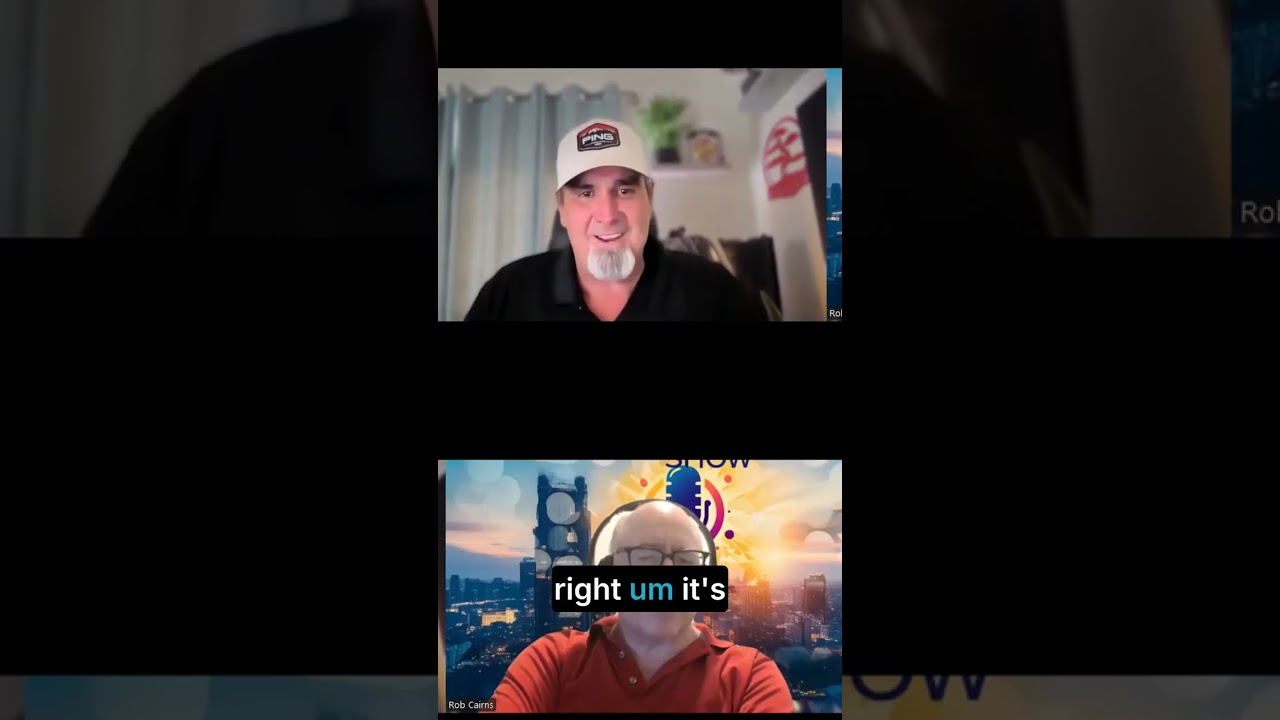
From Self-Taught to AI Expert: How I Entered the AI Space
Bryan Fikes traces his path from self-taught practitioner to AI strategist — and explains why AI has always been about one core principle: learn, then do it better.
Bryan Fikes traces his path from self-taught practitioner to AI strategist — and explains why AI has always been about one core principle: learn, then do it better.
AI is not a new phenomenon — the concept of machine learning predates the current hype cycle by decades.
Bryan's entry into AI began around 2020–2021, driven by a deliberate decision to return to the agency world.
Being self-taught is a strategic advantage in AI — practitioners who figure things out independently develop sharper instincts than those who follow prescribed paths.
Understanding AI at its core means understanding feedback loops: input, output, improvement, repeat.
Timing matters — entering a space before it becomes crowded is how you build authority that lasts.
Most people who call themselves AI experts today started paying attention in late 2022 when the headlines got loud. Bryan Fikes started in 2020. That gap is not a footnote — it is the entire story.
AI Has Always Been the Same Idea
Strip away the product names, the funding announcements, and the hype cycles. At its core, artificial intelligence has always been one thing: a system that takes input, produces output, and gets better the next time around. That is not a new idea. That is computing logic applied to learning behavior, and it has existed in various forms for decades.
What changed is not the concept. What changed is the accessibility, the scale, and the stakes.
Bryan’s framing matters here. When you understand AI as a fundamental principle rather than a product category, you make better decisions about how to use it, when to trust it, and where it will go next.
The 2020–2021 Entry Point
Bryan re-entered the agency space after a deliberate hiatus. He was not chasing a trend — he was reading where things were heading and positioning ahead of it. His move into AI happened around 2020 and 2021, before most marketers had added the word to their LinkedIn headlines.
That timing created something that cannot be fast-tracked: reps. Real reps with real clients in a space that was still being defined. The practitioners who built experience during that window now hold a structural advantage over those who showed up later.
Why Self-Taught Builds Stronger Foundations
There is a particular kind of competence that only develops when no one is handing you the answers. Bryan came into AI without a formal curriculum or a certification program mapping the path. He figured it out.
That process forces you to develop something more valuable than knowledge — it builds judgment. You learn what works by testing, not by being told. You learn what breaks by watching it break. Self-taught practitioners in fast-moving fields tend to be more adaptable precisely because they built their understanding without guardrails.
What This Means for Businesses Working With AI Agencies
When you are evaluating who should guide your AI search strategy, the question is not who has the most recent certification. The question is who has been doing the actual work long enough to have developed real instincts.
Engines like ChatGPT, Gemini, Perplexity, and Google AI Overviews do not surface businesses based on who showed up first — but they do reward the agencies advising those businesses based on depth of understanding and quality of output. You cannot manufacture that depth. It is built over time, through work.
The Core Principle That Does Not Change
Regardless of what the next model release looks like or which engine dominates AI search in 2026, the underlying logic Bryan identified stays constant:
- Systems learn from feedback
- Better input produces better output
- Consistency compounds into authority
That principle applies to AI models. It also applies to how you build visibility inside them.
The practitioners who understood this early are not guessing at best practices — they are the ones the best practices are built from. That is the position Bryan built. And it is the position Bonsai Marketing Company brings to every client engagement.
The space will keep evolving. The advantage belongs to those who built their foundation before it was obvious to everyone else.
Answered.
How did Bryan Fikes get into AI marketing? +
Bryan got serious about AI around 2020–2021 as he was planning his return to the agency space after a hiatus. He came in self-taught, building his understanding from first principles rather than formal training.
What does Bryan Fikes say AI actually is at its core? +
Bryan defines AI at its most fundamental level as the ability to give a system instructions and have it perform better the next time. That feedback loop — learn, execute, improve — is the foundation everything else is built on.
Is being self-taught a disadvantage in the AI space? +
Not according to Bryan. Self-taught practitioners develop the ability to think through problems without a safety net, which builds a more durable and adaptable expertise than credentialed knowledge alone.
When did AI become relevant for marketing agencies? +
AI tools and concepts have existed for decades, but their practical application for marketing agencies accelerated sharply around 2020–2021 — which is precisely when Bryan positioned himself to enter the space.
Why does entering AI early matter for agencies? +
Early entrants build pattern recognition, real-world case history, and positioning that latecomers cannot replicate quickly. Authority in a fast-moving space compounds over time.